


UCPlaces | Guided Audio Tours
UCPlaces LLC
When I first opened UCPlaces | Guided Audio Tours, I understood the appeal quickly: it turns a sightseeing route into something I can follow while listening, rather than making me constantly switch between a map, a guidebook, and search results. It is a free Travel & Local app from UCPlaces LLC, aimed at people who want to explore independently but still appreciate some structure.
My first impression was positive because the idea is practical. I can choose a self-guided experience, move through a place at my own pace, and let the navigation help keep the visit organized. That sounds simple, but it addresses a real problem with city breaks: I want context about what I am seeing without being tied to a group, a meeting point, or somebody else’s schedule.
The important question, though, is whether that convenience survives the first few outings. Travel apps often feel exciting on the first day and then become clutter that I forget to open. In my experience, this one has a clearer chance of becoming a repeat tool when I use it for planned sightseeing rather than treating it as a general-purpose replacement for every travel resource.
What the first week feels like
The strongest part of the early experience is the combination of audio and route guidance. A normal map can tell me where to walk, while a standard audio guide can explain a landmark, but combining those jobs makes the visit feel more continuous. I am not simply reading a list of attractions; I am moving through an area with a narrative attached to the route.
That makes the app especially appealing for a solo traveler. I can keep my attention on the surroundings instead of holding a printed guide or stopping every few minutes to search for the next point of interest. It also suits couples or families who want to explore casually, although the group still needs to agree on the pace. Navigation can guide the route, but it cannot solve the usual travel question of whether everyone wants to stop for coffee, photographs, or a longer look inside a landmark.
Related News

Why WhatsApp Messenger Still Makes Everyday Communication Feel Easy

Jurassic World: The Game Is the Better Dino Tycoon for Strategic Players

Threads in Real Life: Who Should Join, Lurk, or Leave

How SHEIN Turned Shopping Into an Endless Content Feed

How to Make Fortnite Feel Smarter on Mobile

Should You Switch to Microsoft Outlook on Mobile?
During an initial week, I would use it before leaving the hotel, not only after arriving at the first attraction. Looking at the route in advance helps me understand the shape of the outing and decide whether it fits the available time. That small habit matters because a self-guided tour is flexible, but flexibility can also make it easy to start without a realistic plan.
The app is rated for Everyone, which makes its general positioning easy to understand: it is designed for ordinary travelers rather than a narrow specialist audience. Its current version is v2.9.4, and it runs on Android from version 6.0 onward. That broad compatibility is useful if I am traveling with family members who do not have the newest phone.
Still, I would not confuse broad accessibility with a completely effortless experience. Audio tours depend on the phone being usable while walking. Battery level, headphones, street noise, and the need to glance at navigation all affect the experience. I prefer using one earbud or keeping the volume moderate in busy areas, because a tour should not make me unaware of traffic, cyclists, or people around me.
Gallery
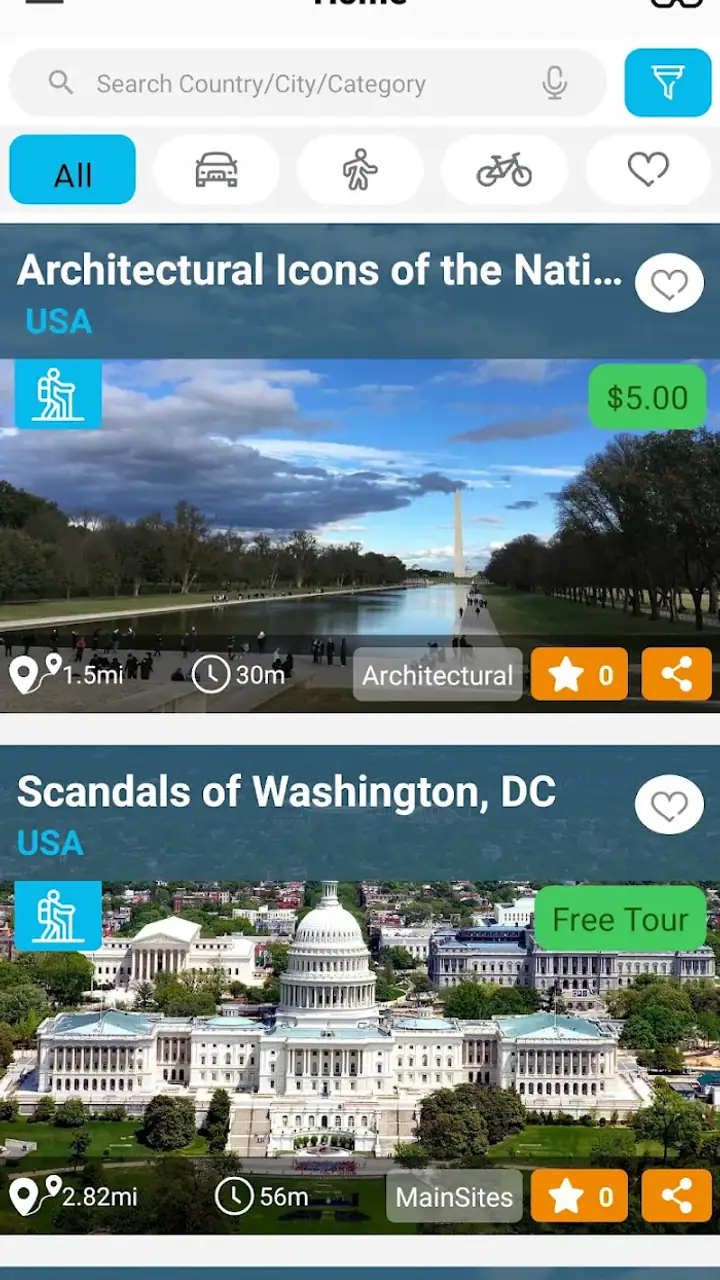
A realistic day in the city
Imagine arriving in a city for a short weekend. I have a free morning, but I do not want to book a formal tour or spend an hour building a route from scattered web pages. This is where the app makes the most sense. I can begin with a guided walk, listen while moving between stops, pause when something catches my eye, and continue when I am ready.
The useful detail in that scenario is not just the spoken information. It is the reduction in small decisions. I do not have to ask repeatedly where the next stop is or keep checking whether I am still following the intended path. That leaves more attention for the place itself. On the other hand, if I want a deeply customized route through several unrelated neighborhoods, a conventional map may give me more control.
One practical tip is to treat the first tour as a test of your walking rhythm. I would not schedule a tight restaurant reservation immediately afterward unless I already know how quickly I move. Browsing a route can look manageable, but sightseeing expands when I stop for photos, enter a building, or take an unplanned break. The app can guide me, but it cannot predict how long I will linger.
Where it differs from ordinary alternatives
The usual alternative is a map application combined with articles, videos, or a downloaded audio guide. That approach offers more choice, but it also creates more preparation. I have to decide what matters, assemble the stops, and keep the route coherent. UCPlaces is more useful when I value a ready-made flow over unlimited customization.
A live group tour offers the opposite trade-off. A human guide can answer questions, adapt the pace, and add personality, but the group schedule and social format are not for everyone. This app gives me privacy and independence, though I lose the spontaneous conversation and local judgment that a good guide can provide.
Printed guidebooks remain better for broad background reading and trip planning away from the street. A map remains better for combining errands, public transport, food stops, and last-minute changes. I see this app as a focused layer between those options: more guided than a bare map, less demanding than a full research project, and less personal than a live expert.
Whether it keeps its value after the novelty
Month-to-month usefulness depends on how you travel
The recurring value is strongest for people who regularly visit new places, take short breaks, or live near destinations they have never properly explored. For those users, a self-guided audio tour can become a repeatable weekend activity. I can use the app when I want a defined outing without committing to a fixed appointment.
For a traveler who takes one major trip a year, the value is different. The app may be very helpful during that trip, but it is less likely to become a daily habit afterward. That is not necessarily a weakness; travel tools naturally have seasonal use. The question is whether the app earns a place on my phone before the next journey, and that depends on how often I explore locally.
I would also separate repeat visits from repeat routes. Returning to the same city does not automatically mean I want to hear the same tour again. The lasting benefit comes when the app helps me discover another area or gives structure to a day I would otherwise spend wandering without a plan. If I only revisit one familiar center, the experience can lose its freshness.
The app has passed the half-million-install mark and carries an average rating of 3.5 from roughly five hundred ratings. I read that as a sign of useful but uneven appeal rather than universal satisfaction. The concept clearly attracts a substantial audience, yet the rating also reminds me that navigation and audio experiences can vary depending on location, expectations, and personal travel style.
The maintenance burden is small, but real
Any travel app creates a little preparation work. I need to keep the phone charged, make sure the app is ready before I leave, and think about how I will listen in a noisy environment. I also prefer checking the route while connected to reliable internet rather than waiting until I am already standing on a crowded street.
I would not call that a heavy maintenance burden, but it is enough to affect whether I use the app spontaneously. A paper guide is always readable, and a familiar map app is usually already part of my routine. UCPlaces earns repeat use when I prepare it alongside the outing instead of expecting it to organize everything at the last second.
There is another maintenance issue that applies to self-guided tours: my surroundings can change. Streets close, attractions alter their entrances, and construction can interrupt a walking route. Navigation helps, but I still need common sense. If the recommended path conflicts with a barrier or a safety concern, I would follow the real-world situation rather than the screen.
That is one of the most important trade-offs. The app reduces planning effort, but it does not remove the need to stay alert. I would use it as a companion, not as an authority that overrides signs, local instructions, or opening arrangements.
What creates fatigue over repeated use
Audio can become tiring when every stop demands close attention. On a long day, I may want silence for part of the walk, conversation with my companion, or time to absorb the surroundings without another explanation. The ability to pause is therefore central to my routine. I would rather listen selectively than force myself to complete every segment.
Navigation can also create mental friction if I keep checking whether I am on the right path. A guided route is calming when it fades into the background; it becomes tiring when I feel I must monitor it continuously. I found the best balance by deciding on a few natural stopping points and allowing myself to deviate briefly for food, rest, or an unexpected attraction.
Another source of fatigue is the difference between a tourist’s curiosity and a resident’s familiarity. A visitor may enjoy historical context for a landmark, while someone who already knows the area may find a basic route less rewarding. This app is most convincing when I am exploring somewhere unfamiliar or deliberately looking at a familiar place from a new angle.
There is also a financial consideration. The app itself is free, but individual in-app purchases range from $0.99 to $39.99 per item. That makes it easy to try the platform without an upfront commitment, but I would check the cost of a particular tour before building my entire day around it. The range suggests that not every experience should be treated as interchangeable, and the right purchase depends on how much time I expect to spend using it.
Who should use it, and who should skip it
I would recommend it to independent travelers who want guidance without a group, people who enjoy learning while walking, and visitors who do not want to spend their whole evening researching routes. It is also a sensible option for a couple with different interests: one person can follow the route while the other decides where to pause, rather than both having to manage a complicated itinerary.
It may suit families, but I would set expectations carefully. Children may enjoy the movement and stories for a while, then lose interest or want to change direction. The app can provide structure, but parents still need to adapt the outing around breaks and attention spans.
I would skip it when I need a highly personalized itinerary, live answers to detailed questions, or a guide who can react to accessibility needs in real time. I would also choose a regular map first if my main goal is finding transport, comparing restaurants, or combining many unrelated errands. For those tasks, the audio-tour format is more focused than flexible.
Likewise, travelers who strongly prefer spontaneous wandering may feel constrained by a route, even if the route is technically optional. The app works best when I want a little direction. If the pleasure of the trip comes from having no plan at all, its main strength may feel like unnecessary structure.
Small habits that improve the experience
I get more from the app when I divide a visit into manageable sessions instead of trying to complete everything in one push. A morning walk, a lunch break, and an afternoon continuation are easier on my attention than a single uninterrupted stream. Pausing also gives me room to take photographs and notice details that an audio narration cannot point out.
I would keep a backup plan in mind. That does not mean preparing a second complete tour; it means knowing the general area and having a normal map available if I decide to leave the route. This is particularly useful when weather, crowds, tiredness, or an unexpected closure changes the day.
Headphones are another personal choice worth testing before a major trip. Speakers may be convenient for a private room but are awkward in public, while fully isolating earbuds can reduce awareness of traffic. I prefer a setup that lets me hear the narration without losing contact with the environment.
Finally, I would use the app as a starting point for curiosity rather than the final word on a place. When a story interests me, I may read more later or return at a quieter time. That approach prevents the tour from becoming a checklist and gives the experience value beyond simply reaching the next stop.
My long-term verdict
After the initial novelty fades, UCPlaces | Guided Audio Tours keeps its place best as an occasional travel companion, not as an app I would expect to open every day. Its lasting strength is the way it joins narration with movement. I can explore independently while still receiving enough structure to avoid aimless walking or constant route planning.
The limitations are equally clear. It cannot replace a live guide’s judgment, a map’s broad flexibility, or a book’s depth. Audio may become tiring, routes may not suit every visitor, and paid tour choices deserve attention before I commit. The free entry point is welcoming, but the overall cost depends on which experiences I select.
For me, the app earns a recurring place when I am visiting unfamiliar areas or trying to turn a free morning into a purposeful outing. It is less compelling for routine navigation, highly customized travel, or trips where conversation and spontaneity matter more than guided context. That is a healthy boundary: I know exactly when to reach for it and when another tool is better.
My recommendation is therefore positive but selective. If you want a self-directed walk with audio guidance and a clearer sense of where to go next, it is worth trying. Give it a realistic schedule, stay alert to the street around you, and do not force yourself to complete every segment. The app earns lasting value when it supports your curiosity without taking control of the trip.
Developed by UCPlaces LLC, it remains an approachable choice for independent sightseeing, especially for travelers who prefer their plans flexible but not completely unstructured. I would keep it installed for future city breaks and local explorations, while still relying on a conventional map and my own judgment whenever the day changes direction.
FAQs for UCPlaces | Guided Audio Tours
What is UCPlaces | Guided Audio Tours?
UCPlaces is a location-based travel app that provides self-guided audio tours for cities, landmarks, neighborhoods, and scenic routes. Instead of following a fixed group or guide, you explore at your own pace while the app explains the history, culture, architecture, and stories connected to each stop. It is designed for independent travelers who want more context than a standard map can provide.
How do UCPlaces audio tours work?
After selecting a destination or tour, the app guides you through a planned route using audio narration and location-based information. Depending on the tour, content may play automatically when you reach specific points or be available for manual playback. Before starting, review the route, estimated duration, walking requirements, and any instructions so you can plan comfortably and avoid missing important stops.
Does UCPlaces require an internet connection?
Internet requirements can vary depending on the specific tour and the content downloaded to your device. A connection may be needed to browse tours, load maps, access location data, or stream audio. For reliable use while traveling, it is sensible to open the tour before leaving, download any available offline materials, and confirm that the route and narration remain accessible without mobile data.
Are UCPlaces tours free, or do they cost money?
UCPlaces may offer a combination of free content, previews, and paid tours, depending on the destination and the current app catalog. Pricing, promotions, and access rules can change, so check the tour page and the in-app purchase details before beginning. Pay attention to whether a purchase unlocks one route, a package, or broader access, and review refund terms through your app store.
Is UCPlaces suitable for families, solo travelers, and people with limited mobility?
The app can be useful for solo travelers, couples, families, and visitors who prefer flexible sightseeing without a scheduled guide. However, suitability depends on each route. Some tours may involve long walks, hills, stairs, traffic crossings, or uneven surfaces. Read the route information carefully, wear comfortable footwear, keep your phone charged, and use accessibility details where provided before choosing a tour.
Pros
- Self-guided tours let you explore at your own pace.
- Audio narration adds local context while you walk or drive.
- GPS-based stops help keep the route organized.
- Useful for travelers who prefer flexible
- independent sightseeing.
- Can make familiar destinations feel more engaging and informative.
Cons
- Tour availability may vary greatly by destination.
- Some tours may require separate purchases or paid access.
- GPS accuracy can affect automatic stop detection.
- Outdoor use depends on battery life and phone connectivity.
- Narration quality and depth may differ between tour creators.


